logo
Телефон:
Tellhow Technology (Chongqing) Co., Ltd.
Наш двигатель, сэкономите энергию, управляйте своим успехом!
Главная страница Блог

Coal Plant Efficiency Boosted by Pulverization System Upgrades

Оставьте нам сообщение
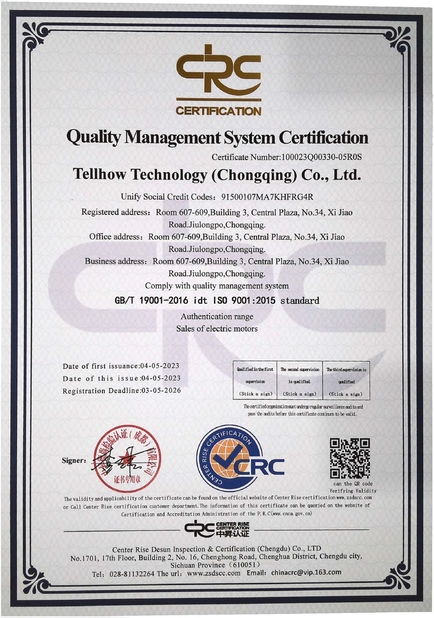
Сертификация
Китай Tellhow Technology (Chongqing) Co., Ltd. Сертификаты
Просмотрения клиента
Мотор бежит совершенно с малошумным, и видео- удаленное обслуживание наведения установки превосходно. Наши руководители очень удовлетворены.

—— Misha Gladushchenko

Фабрика очень неукоснительна и серьезна о технологии, и может обеспечить очень научные предложения для регулировать детали моторов согласно нашей окружающей среде использования. Это очень надежная компания.

—— Nur Rizky Amalia

компания Блог
Coal Plant Efficiency Boosted by Pulverization System Upgrades
последние новости компании о Coal Plant Efficiency Boosted by Pulverization System Upgrades

Coal pulverizing systems serve as the backbone of coal-fired power plants, where their operational efficiency directly impacts overall plant performance, reliability, and economic outcomes. Any malfunction in the coal grinding process can lead to reduced output or even complete unit shutdowns, resulting in significant financial losses. The power industry has long prioritized improving control mechanisms for these systems to enable early fault detection and prevention. This article examines key technical aspects of coal pulverizing systems and reviews global research progress in this field.

1. Overview of Coal Pulverizing Systems

Commonly referred to as mill systems, coal pulverizers perform the essential function of grinding raw coal into fine powder while using hot air to dry the material before transportation to boiler burners. A standard system comprises several critical components:

  • Coal feeders: Deliver raw coal from storage bunkers to mills at consistent rates
  • Grinding mills: Core equipment that pulverizes coal through mechanical action
  • Hot air systems: Provide drying heat through primary air fans and air preheaters
  • Classifiers: Separate fine particles from coarse material for regrinding
  • Powder conveyance: Transport finished product to storage or burners
  • Control systems: Monitor and adjust operational parameters

1.1 Mill Classifications

As the system's centerpiece, mill performance determines both powder quality and production efficiency. Mills fall into three primary categories based on operating principles:

  • Impact mills: High-speed units like hammer mills that fracture coal through kinetic energy
  • Ball mills: Low-speed drums using tumbling steel balls for gradual size reduction
  • Medium-speed mills: Including bowl mills and roller mills that employ compressive forces

1.2 Production Process

The transformation from raw coal to combustible powder involves multiple physical processes:

  1. Controlled feeding of raw material
  2. Mechanical size reduction
  3. Thermal drying with hot gases
  4. Particle size classification
  5. Final product transport

1.3 Quality Parameters

Powder characteristics significantly influence combustion efficiency and emissions:

  • Fineness: Particle size distribution measured by sieve analysis
  • Moisture content: Affects calorific value and flame stability
  • Size uniformity: Impacts combustion consistency
  • Grindability: Material's resistance to pulverization

2. System Control Methodologies

Modern control strategies aim to maintain product specifications while optimizing energy use and operational safety. Key control loops include:

  • Feed rate regulation
  • Hot gas temperature management
  • Mill discharge temperature control
  • Particle size adjustment
  • Load balancing

2.1 Conventional Approaches

Traditional PID controllers face limitations in handling the system's nonlinear dynamics and variable coal properties, prompting development of advanced alternatives.

2.2 Next-Generation Controls

Recent innovations include:

  • Decoupling techniques for interacting control loops
  • Model predictive control for constraint handling
  • Fuzzy logic for uncertainty management
  • Neural networks for adaptive control
  • Evolutionary algorithms for parameter optimization

3. Fault Diagnosis Techniques

Harsh operating conditions make fault detection critical for preventing catastrophic failures. Common issues include:

  • Mill blockages
  • Powder silo fires
  • Classifier malfunctions
  • Feeder irregularities
  • Primary fan failures

3.1 Diagnostic Advancements

Modern approaches leverage:

  • Vibration and acoustic analysis
  • Expert system knowledge bases
  • Model-based discrepancy detection
  • Machine learning pattern recognition

4. Operational Optimization

System tuning focuses on:

  • Mill parameter adjustment
  • Airflow optimization
  • Particle size calibration
  • Predictive maintenance scheduling

4.1 Implementation Strategies

Optimization methods include:

  • First-principles modeling
  • Heuristic rule bases
  • AI-driven decision support

5. Future Directions

Emerging technologies promise:

  • Enhanced system modeling
  • Advanced control algorithms
  • Proactive fault prediction
  • Autonomous optimization

Continued innovation in coal pulverization technology will remain vital for thermal power generation's efficiency and environmental performance.

Время Pub : 2026-09-26 00:00:00 >> список блога
Контактная информация
Tellhow Technology (Chongqing) Co., Ltd.

Контактное лицо: Mr. Alex Yip

Телефон: +86 2386551944

Оставьте вашу заявку
Tellhow Technology (Chongqing) Co., Ltd.
Комната 607-609, здание 3, центральная площадь, No.34, XI дорога Jiao. Чунцин. Китай
Телефон:86-155-23661144
Мобильный сайт политика конфиденциальности | Китай хороший Качество Высоковольтный мотор AC поставщик. © 2022 - 2026 Tellhow Technology (Chongqing) Co., Ltd.. All Rights Reserved.